
Quick answer
The Okavango Delta flood peaks between May and September, when water from Angola's highlands fills the channels and transforms the landscape into a network of lagoons. Dry-season game viewing is strongest from August through October, as wildlife concentrates around permanent water. November through March brings the rains, green vegetation, and the best birdwatching, though some camps close and roads become impassable.
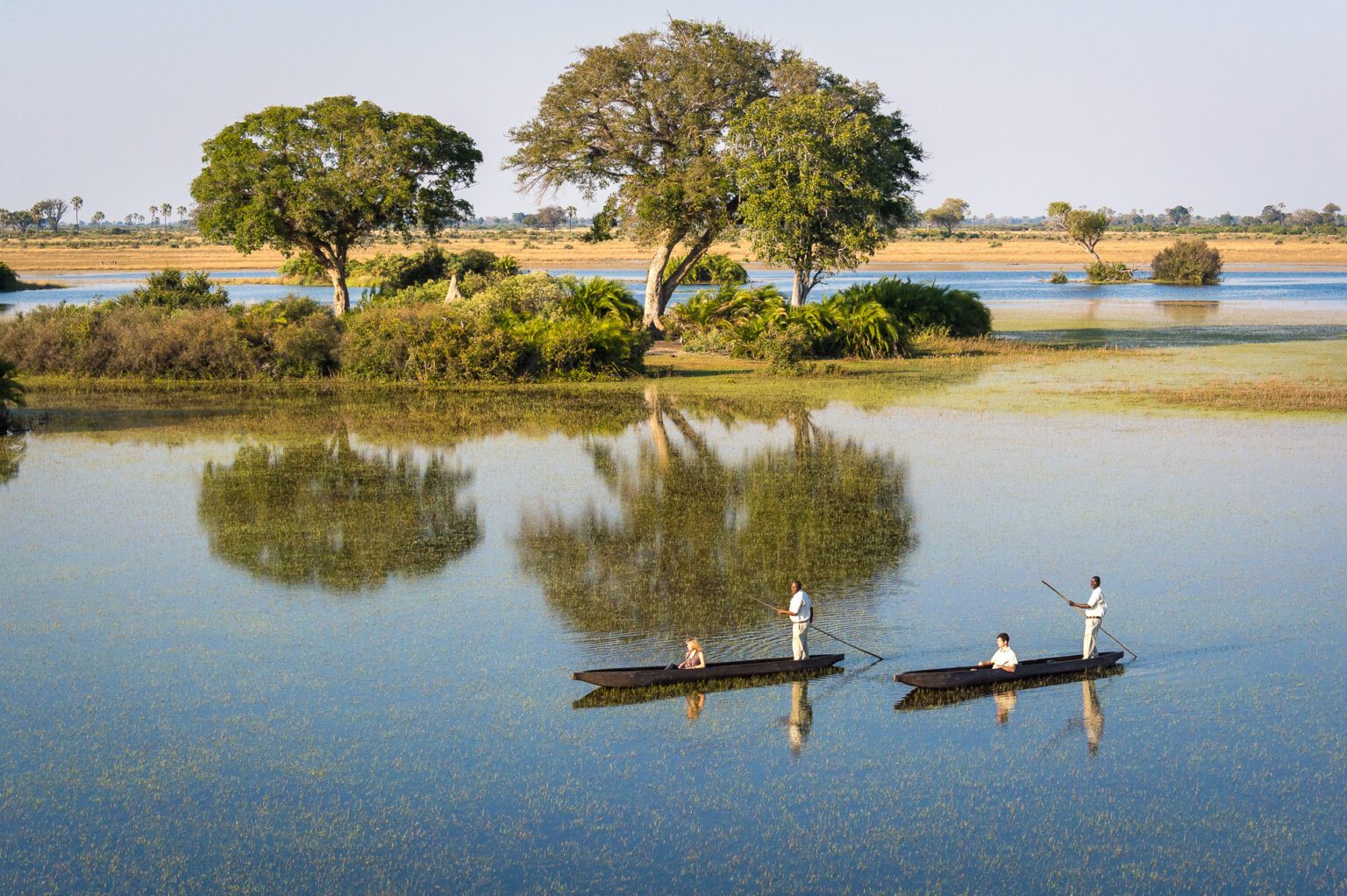
The Okavango Delta receives its flood six months after the rains fall in Angola, a hydrological delay that defines the entire visitor calendar. While most of southern Africa dries out in winter, the Delta swells with water, turning dust into aquatic floodplain and doubling the wetland area between April and June. The flood arrives in pulses rather than as a single wave, advancing through the panhandle in March and reaching the southern channels by July, where it disperses into the Kalahari sands. Wildlife viewing follows the water's recession. From August onward, the floodwaters begin their retreat, and the game-viewing window sharpens. Elephants, buffalo, and antelope herds move toward permanent lagoons and river channels as seasonal pans dry out across the surrounding woodland. By October, the Moremi Game Reserve and the private concessions along its northern edge see the highest concentrations of predators and prey, drawn together by thirst rather than by chance. Early morning game drives—the best arrival window is 06:00–09:00—offer the clearest sightings before midday heat drives lions and leopards into thickets. The summer rains reverse the pattern. From November through March, afternoon thunderstorms refill the pans, zebra and wildebeest disperse into the mopane forests, and migrant birds arrive by the hundred thousand. The Delta greens overnight, but accessibility drops: dirt tracks turn to mud, some lodges close for the wet season, and mokoro trails shift as water levels climb unpredictably. Birdwatchers favor this window for carmine bee-eaters, African skimmers, and the returning flocks of white storks, though mammal sightings thin as game scatters across renewed grazing. Choosing when to visit the Okavango Delta means choosing between high water and high game density, between exclusive wildlife encounters and the chance to paddle through flooded forests under a canopy of figs. The park gate opens daily from 06:00 to 18:30, and the entrance fee stands at 500 BWP per international adult per day, regardless of season. Most operators recommend booking the flood months for mokoro safaris and the late dry season for predator tracking, though neither window guarantees the other's rewards.
“The Okavango receives its flood six months after the rains fall in Angola, a hydrological delay that defines the entire visitor calendar.”
Determining When to Visit Okavango Delta by Season and Water Levels
The optimal time to visit the Okavango Delta spans from June to August, when the annual floodwaters arrive to create ideal conditions for mokoro excursions. This period balances high water levels for aquatic travel with drier land conditions that improve terrestrial game viewing.
June–August
ModerateCool, dry days, 20°C–25°C
High water levels allow for extensive mokoro exploration throughout the delta channels. This is the peak season for water-based activities and wildlife concentrations.
September–October
ModerateHot and dry, 30°C–35°C
Water levels begin to recede, concentrating wildlife around remaining permanent water sources. This climate is effective for game viewing but requires preparation for significant heat.
November–May
LowHot and humid, 25°C–35°C
The summer rainy season causes water levels to drop and vegetation to thicken, making game more difficult to spot. Mokoro access may be limited to specific permanent channels.
Verdict: For the best balance of water-based activities and wildlife sightings, plan your visit between June and August.
Daily Operational Hours When to Visit Okavango Delta
The Okavango Delta operates daily throughout the week. Visitors are advised to plan their arrival within the early morning window to maximize wildlife viewing opportunities.
| Monday | 06:00–18:30 | |
|---|---|---|
| Tuesday | 06:00–18:30 | |
| Wednesday | 06:00–18:30 | |
| Thursday | 06:00–18:30 | |
| Friday | 06:00–18:30 | |
| Saturday | 06:00–18:30 | |
| Sunday | 06:00–18:30 |
Navigating Arrival Logistics When to Visit Okavango Delta
Moremi Game Reserve is located within the Okavango Delta, Botswana. Accessing this remote wilderness requires careful logistical planning, typically involving light aircraft transfers or long-distance ground travel.
4x4 vehicle via North Gate (Khwai) or South Gate (Maun)
Transfer from Maun or safari camp jetty
Private transfer to Maun airport or base camp
Preparation Checklist for When to Visit Okavango Delta
Essential documentation and gear to prepare before entering Moremi Game Reserve.
-
Confirm your park booking in advance — Permits are required for entry and may have limited daily capacity.
-
Carry valid passport and booking confirmation — Reserve gate staff verify identity and reservation status at entry.
-
Pack binoculars and a camera with zoom lens — Wildlife viewing distances require magnification for safe observation.
-
Bring sun protection and a wide-brimmed hat — Daytime temperatures are high with minimal natural shade in open floodplains.
-
Wear neutral-colored, long-sleeved clothing — Earth tones reduce visibility to wildlife and protect against sun and insects.
-
Load insect repellent with DEET — Mosquitoes are prevalent, especially near water channels and during wet months.
-
Store water in sealed containers — Hydration is critical during game drives; potable sources are unavailable in the reserve.
Check availability
Frequently Asked Questions About When to Visit Okavango Delta
Everything you need to know about when to visit okavango delta